
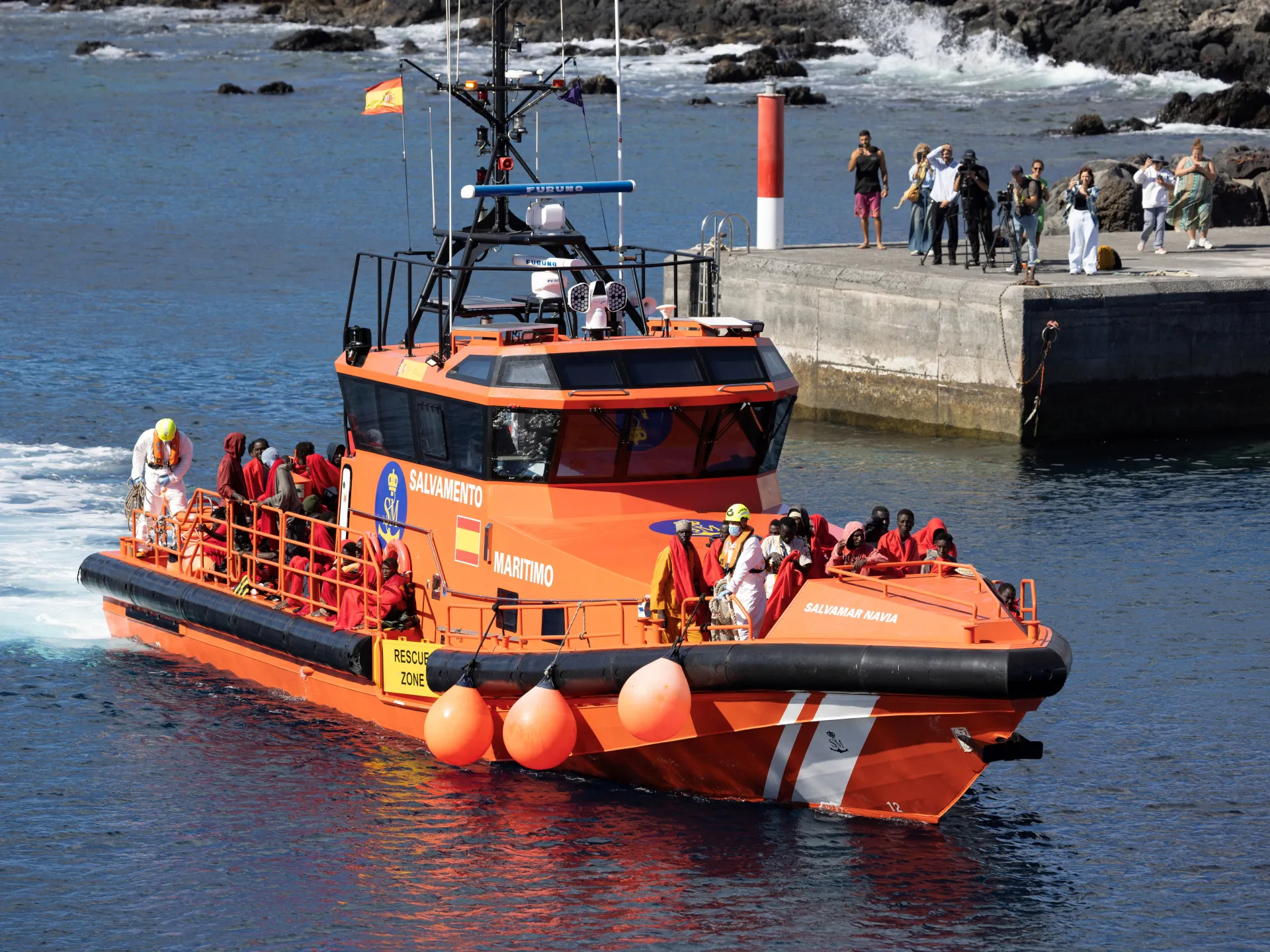
Spanish maritime rescue services reported on Friday that between eight and 10 bodies were discovered aboard a migrant boat. The vessel, which carried about 100 people, was located 39 nautical miles, or 72 kilometers, south of El Hierro and was towed to the port of La Estaca. Six people in serious condition were airlifted to the hospital. In a separate incident, 84 survivors from a different boat arrived at La Restinga, the main port on El Hierro that features a reception center and field hospital.
The Canary Islands, a Spanish region in the Atlantic Ocean located off the coast of northwest Africa, serve as a primary entry point for migrants from West Africa seeking to reach Spanish and European Union territory. After hitting a record of over 46,000 arrivals in 2024, numbers fell following increased surveillance and cooperation with transit and origin countries. However, patrols off Mauritania, Senegal, and Morocco pushed departures further south to Guinea, Guinea-Bissau, and The Gambia, increasing the length and danger of the crossing.
Arrivals have accelerated since October, culminating in a record 2,100 people arriving on the islands in a single day earlier in the week, mostly on El Hierro, which has 11,400 residents. Following an emergency declaration by authorities earlier in the month, rescuers brought in nearly 1,500 people in a single day on November 14. Fernando Clavijo, the regional leader, stated on X that the humanitarian emergency begins on the shores of Gambia and Senegal rather than El Hierro, expressing deep pain and a feeling of impotence regarding the deaths while calling for action from the European Commission and the Spanish government.
The fatalities occurred two days before Spain’s general elections on Sunday, where immigration has emerged as a defining issue. While Prime Minister Pedro Sanchez advocates for the economic benefits of immigration, leading right-wing parties favor significantly tighter controls. Thousands of migrants attempt the dangerous Atlantic crossing annually from West Africa in overcrowded boats, navigating rough seas and strong currents on what is recognized as one of the deadliest migration routes in the world. Arrivals typically peak between September and November due to more favorable sea conditions.
Source: Al Jazeera English
