
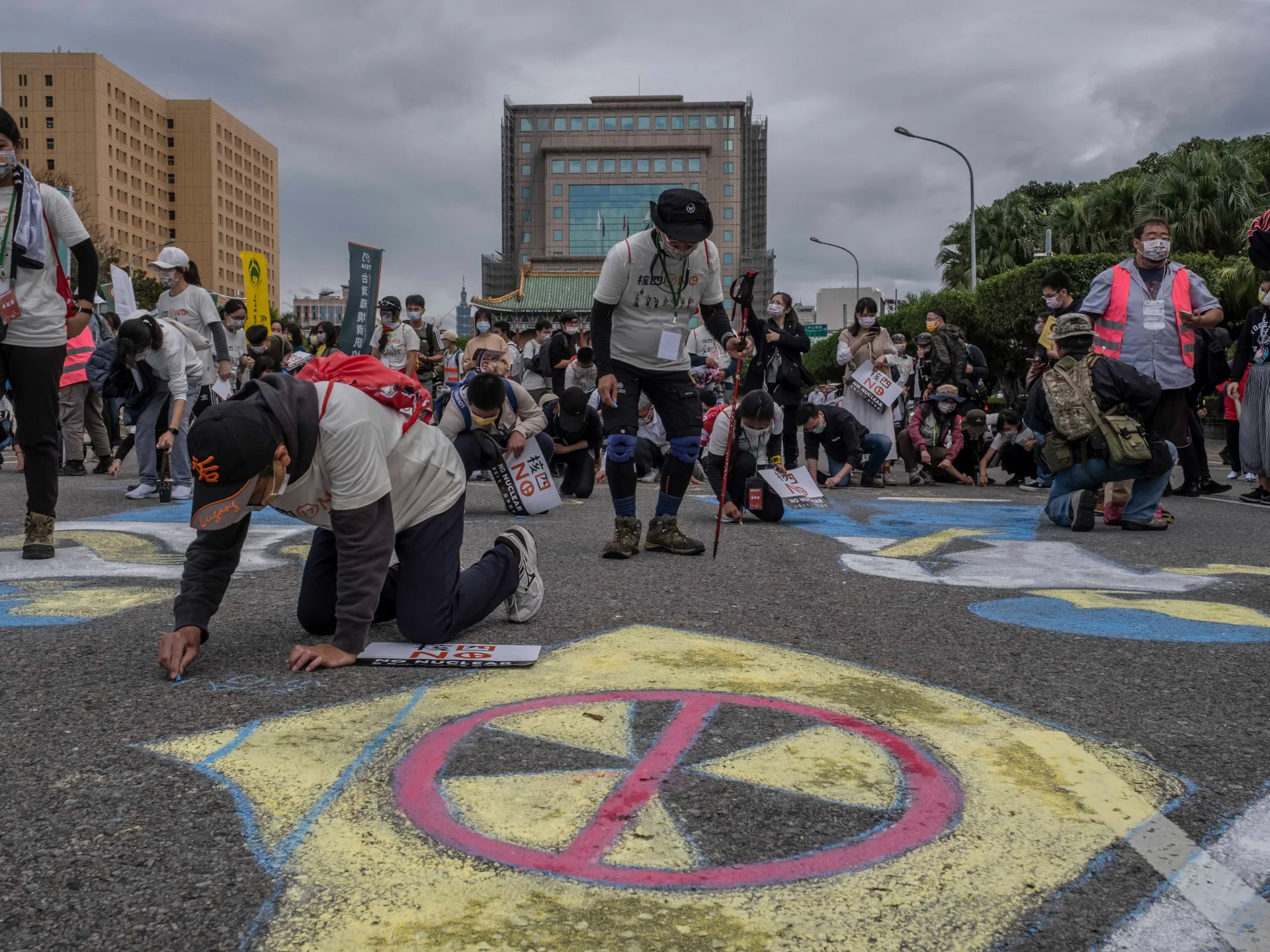
Voters in Taiwan are deciding on Saturday whether to bring back nuclear power, arriving 18 months after the island shut down its last operational reactor. The referendum is taking place alongside local elections and marks the fourth time in eight years that the island has held a vote on nuclear power. To pass, ‘yes’ votes must exceed a quarter of all eligible voters and outnumber ‘no’ votes.
The opposition Kuomintang (KMT) proposed the referendum, which is also backed by the Taiwan People’s Party (TPP). The legislature approved the measure in August, and the Central Election Commission signed it off on August 28. Meanwhile, the ruling Democratic Progressive Party (DPP), which has historically maintained a no-nuclear policy, is urging voters to reject the proposal. DPP legislator Chen Pei-yu criticized the referendum as unnecessary, arguing that lawmakers could alter the policy through statutory amendments instead.
Nuclear energy has long been a partisan issue in Taiwanese politics, dividing the DPP and KMT. Lev Nachman, an assistant professor at National Taiwan University, noted that the DPP originated partly from an environmentalist movement that was strongly anti-nuclear, whereas the KMT built and operated the nuclear industry. Deep safety concerns persist on the island, driven by memories of the 2011 Fukushima nuclear plant meltdown in Japan, active geological fault lines, and the unresolved challenge of nuclear waste disposal. The DPP governed on a pledge to phase out nuclear power, culminating in the closure of the final reactor at Maanshan in Pingtung County in May of last year.
The debate has resurfaced due to rapidly rising electricity demand from Taiwan’s semiconductor and artificial intelligence industries, combined with anxieties over energy security and reliance on imported fuel. According to the Ministry of Economic Affairs, Taiwan imports more than 97 percent of its energy. Coal supplies roughly 35 percent of its electricity, and natural gas provides about 43 percent, with both fuels arriving by ship. Taiwan holds about 11 days of liquefied natural gas (LNG) in reserve, compared with 14 to 20 days for Japan and South Korea. Recent pressure has also mounted following disruptions to Middle Eastern LNG shipments stemming from the war with Iran.
Amid these pressures, the DPP administration has initiated a shift. In March, President William Lai Ching-te announced that the government would begin the process of restarting the Maanshan and Kuosheng plants, pointing to AI-driven demand and foreign conflicts disrupting energy supplies. On September 24, the Nuclear Safety Commission approved state-owned Taipower’s restart plan for Maanshan, though further safety assessments are still required. Nachman stated that President Lai has sought to prompt his party to rethink its anti-nuclear stance, though the ultimate result depends on whether DPP voters have shifted their views. If the measure passes, Nachman suggested that Lai and the DPP would likely accept it.
Source: Al Jazeera English
