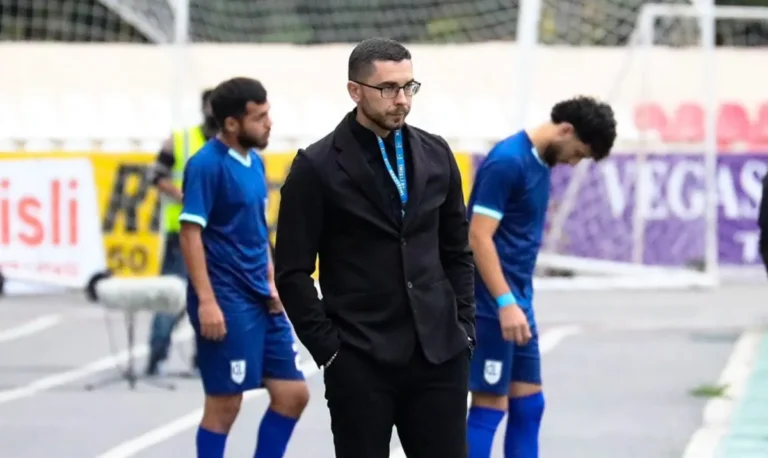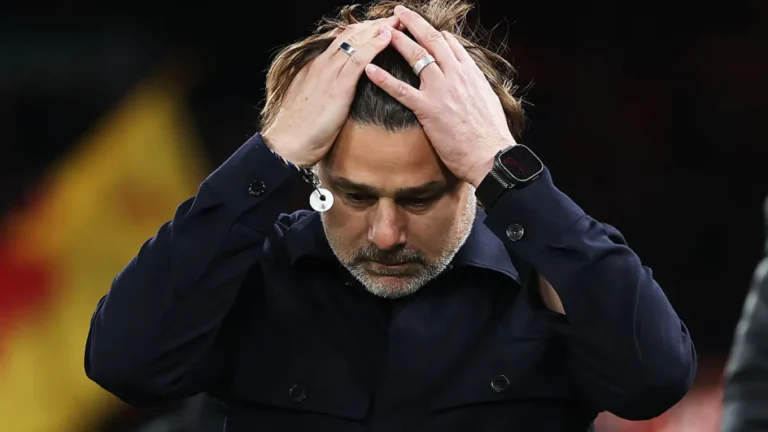
Riga FC remain unbeaten yet continue to search for their first victory, whereas Kauno Žalgiris have faced difficulties against tougher opposition. Reaching the halfway point of their maiden Conference League league-phase campaigns, the two Baltic clubs are navigating separate obstacles ahead of their upcoming encounter.
Salah Oulad appeared to have re-established Riga FC’s advantage against Jablonec when his strike sailed into the top corner. However, the goal was disallowed following a VAR review that identified a foul earlier in the sequence, leaving the fixture on November 5 locked at 1-1.
This result marked Riga’s third straight draw, keeping them undefeated and positioned inside the provisional play-off spots, though still awaiting an initial league-phase win. On that very same evening, Kauno Žalgiris found themselves trailing by three goals against Lugano after 32 minutes of play. That third loss placed them at the bottom of the table, having scored only once while conceding 11 times.
The pair of debutants are scheduled to meet in Kaunas on November 26 with a margin of three points separating them. Admittedly, Riga have come close enough to triumphs to experience frustration, whereas Kaunas have repeatedly reached the half-time interval with matches already slipping away from them. Their respective schedules help account for this disparity. Brighton, Brann, and Lugano have accumulated 14 points from their six fixtures against opponents aside from Kaunas. Meanwhile, Kairat, Pafos, and Jablonec have secured just two points from their six matches outside of their fixtures against Riga. Furthermore, Riga have played twice at home, while Kaunas have undertaken two away trips. Even though the opening three rounds provide merely an initial gauge of performance, the two sides have encountered significantly different tests. Nevertheless, the campaign has already reached its midpoint.
Flashscore’s data reinforces Riga’s sense of missed opportunities. Their 47 attempts on goal have yielded three goals, contrasting with a combined expected-goals figure of 5.63. Their opponents have created 3.11 expected goals. These metrics assessing chance quality incorporate penalties, notably Muhammed Badamosi’s missed spot-kick against Kairat, while further supporting the impression that Riga deserve more reward for their displays.
Midfielder Iago Siqueira shared his perspective prior to the Jablonec match, looking back on the opening two draws by stating that his feeling was they could have won both of those games. Riga had bounced back after conceding an early penalty against Kairat before Badamosi failed to convert his own. Over in Pafos, Caio Ferreira gave them the lead, only for that advantage to vanish in under 10 minutes.
Oulad has been involved in all three of the team’s league-phase goals. The former Arsenal youngster scored against Kairat, provided the assist for Ferreira in Cyprus, and set up Reginaldo Ramires to win and successfully convert the penalty against Jablonec. Still, the Jablonec fixture also highlighted the limitations of the argument that Riga have simply been wasteful. They controlled 60% of possession but registered only two shots on target, compared to the visitors’ three. Jablonec, despite seeing less of the ball, proved more dangerous during transitions and sturdier in defence. Head coach Adrián Guľan conceded that the draw was fair after the introduction of Garang Kuol helped Jablonec recover from their half-time deficit. Riga have remained competitive throughout, but securing that additional goal or displaying enough defensive control to safeguard a lead has proven more difficult.
For Kaunas, the most telling trend is how early their fixtures have slipped beyond rescue. Eight of the 11 goals they have conceded occurred during the first half, and they have trailed by at least two goals at the break across all three matches.
Against Brighton, they held firm until the 41st minute before letting in two quick goals. In the match versus Brann, Renan Oliveira’s equaliser briefly brought them level, only for Noah Holm to net twice prior to the interval. In both instances, a competitive scoreline devolved into disaster before Kaunas could regroup during the half-time break.
Facing Lugano, Željko Sopić made six changes and deployed a five-man defensive line. Injuries continued to sideline Oliveira, Marko Konatar, and Franco Baldassarra. This tactical reshuffle did little to subdue the hosts, who established a 3-0 lead by the 32nd minute, while Kaunas recorded their first shot on target as late as the 82nd minute that evening.
Anthony Kalik had pinpointed part of the underlying issue following the Brann game, remarking that they showed their opponents too much respect and arguing that Kaunas retreated following their equaliser when they ought to have pressed higher up the pitch. Sopić expressed similar dissatisfaction after the Lugano fixture, criticising the first-half work rate and avoidable giveaways of possession near their own penalty area.
Kaunas’ continental struggles run parallel to a successful domestic campaign. They successfully defended the Lithuanian title and completed a treble, accumulating 58 points to finish two ahead of Sūduva. Their 62 goals scored represented the highest tally in the division, while their 25 goals conceded were the fewest. This makes it all the more notable that a defence breached merely 25 times across 32 domestic matches has subsequently shipped 11 goals in three league-phase outings, with more matches remaining.
Securing the Toolyga influenced Sopić’s selections in Europe. Following a 4-1 home loss against Brann, he defended his decision to prioritise the domestic title race and stated he would deploy the exact same starting line-up again. Defending the championship, he contended, enhanced the club’s probability of securing a return to a European league phase. Achieving that domestic goal alleviated that conflict, though the absences witnessed against Lugano demonstrated that his squad options remained limited.
Riga’s domestic season presents a less encouraging parallel with their European form. After 35 league fixtures, Riga and RFS had both suffered two defeats, but Riga’s eight draws compared to their rivals’ five accounted for the entire six-point deficit. A scoreless draw against relegated Ogre United, during which Badamosi missed another penalty kick, effectively extinguished their title aspirations. Frequently, merely avoiding defeat proved inadequate.
The season ultimately concluded amid a dispute when Riga declined to contest the final derby against RFS on November 8, citing what the club regarded as unfair treatment. The Latvian Football Federation handed down a 3-0 forfeit defeat, issued a €6,822 fine, and imposed a three-point deduction for the 2027 season, subject to appeal. Consequently, RFS wrapped up the campaign with 92 points, standing nine points clear of Riga.
Guľa stated during a November 15 interview with Šport.sk that his players had prepared to face RFS and that he disagreed with the decision to boycott the match. His own personal future remains unsettled as well. With his contract set to expire on November 30, he confirmed discussions regarding a 17-day December extension to cover the remaining European fixtures, though he noted no formal agreement had been reached.
This uncertainty can likewise influence squad rotation. Ten players have started all three league-phase matches, with Ramires replacing Badamosi marking the sole alteration to the starting XI. Guľa had previously mentioned that Riga entered the season with roughly 17 established players; ahead of the Latvian Cup final, he stated that several international players had now logged 60 matches. Riga are set to face Auda in that final on November 20, aiming to avenge last year’s 2-1 defeat. Captain Raivis Jurkovskis acknowledged a degree of fatigue during the preparations while maintaining that the squad members were physically prepared. This encounter presents Riga with an opportunity to bring silverware into the European Baltic derby, while also imposing another heavy demand on the player pool. Conversely, Kaunas have enjoyed more recovery time. Following their final domestic fixture, a 4-1 loss away to TransINVEST on November 8, Sopić granted his players five days off. He noted that four or five players were managing injuries and expressed hope of having them available for the Riga match. The three-week gap separating European fixtures provides beneficial preparation time, though both clubs will report to the pitch possessing varying levels of recent match sharpness.
Extending the campaign into December has generated logistical demands beyond the playing squad. Kaunas have installed LED grow lights at Darius and Girėnas Stadium to sustain the pitch turf throughout the winter months, alongside plans for a protective cover. Stadium director Saulius Balnanosis explained that under-soil heating supplies warmth but cannot substitute for natural sunlight. Their home fixture against Freiburg is scheduled for 22:00 on December 17.
Participation in European competition also delivers substantial financial revenue. Under UEFA’s published distribution framework for 2026/27, both clubs qualify for a league-phase starting allocation of €3.17m. Riga’s three draws have added €399,000 in match bonuses, calculated at €133,000 per draw, whereas Kaunas’ three losses have yielded none. In total, this equates to €3.569m for Riga and €3.17m for Kaunas thus far, with additional UEFA distributions calculated independently. Nevertheless, a win awards €400,000, meaning a triumph over Riga would draw Kaunas level with their neighbours on points while putting them €1,000 ahead in performance bonuses.
Sopić has also connected the pursuit of points to enhancing Kaunas’ chances of securing seeded status in the qualifiers for next season’s Champions League. He stated after the domestic finale that they would give everything to earn points, already framing the value of the remaining fixtures as preparation for another continental campaign.
Meanwhile, Kaunas still have an away trip to Egnatia and the match against Freiburg ahead of them, whereas Riga must confront Atalanta and Borac Banja Luka. However, that comes after they play each other. Riga need to translate the chances they are generating into winning scorelines, whereas for Kaunas, the immediate priority is to reach the second half of any European fixture with a result still within their grasp.
Source: balticfootballnews.com